
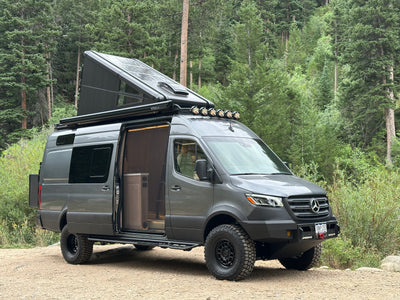
Overlanding Vehicle Modifications for Remote Work and Digital Nomad Lifestyles

Read Time:6 Minute, 9 Second
Picture this: you’re parked on a bluff overlooking the Pacific, laptop open, coffee steaming, and a client call starting in ten minutes. The signal bars are holding steady. Your desk is… well, your truck. That’s the dream, right? Overlanding meets remote work. But honestly, making that dream functional takes more than a rooftop tent and a sense of adventure. It takes deliberate, sometimes nerdy, vehicle modifications.
I’ve spent the last few years bouncing between forest service roads and Zoom meetings, and let me tell you — the gap between “cool rig” and “mobile office” is wider than most people think. So let’s dive into the mods that actually matter when your livelihood depends on staying connected, powered, and sane.
Power: The Quiet Backbone of Any Mobile Office
Without reliable power, your laptop is a paperweight. Your Starlink is a plastic dish. Your dreams? On hold. So yeah, power comes first.
Most overlanders start with a dual-battery system — one for the engine, one for the house. That’s fine. But for remote work, you’ll want to go further. Think 200 to 400 amp-hours of lithium (LiFePO4) battery capacity. Why lithium? It’s lighter, lasts longer, and charges faster than old-school AGM. Sure, it costs more upfront. But when you’re editing video in the middle of nowhere, you’ll thank yourself.
Pair that with:
- Solar panels — 300 to 600 watts, mounted flat or portable. Flat is convenient; portable lets you chase the sun.
- DC-to-DC charger — pulls power from your alternator while driving. Great for topping off on move days.
- Inverter — pure sine wave, at least 2000W. That’s for your laptop brick, monitor, or even a small printer.
And here’s a subtle one: a battery monitor. Knowing exactly how much juice you have left is the difference between calm and chaos. Trust me on that.
Connectivity: Because “No Signal” Is Not a Strategy
Let’s be real. You can have the most rugged rig on the continent, but if you can’t upload a file, you’re just camping. Connectivity is the make-or-break mod for digital nomads.
The game-changer? Starlink Roam (formerly RV). It’s not perfect — trees, canyons, and heavy overcast can ruin your day. But when it works, it works. Mount it on a telescoping pole or a flat roof rack. Just make sure you have a clear view of the northern sky (or southern, if you’re below the equator).
Backup options matter too:
- Cell signal booster (like WeBoost) — grabs weak signals and amplifies them. Helps in fringe areas.
- Dual SIM router — lets you switch between carriers without swapping cards. Useful when one network dies.
- Portable hotspot — for quick coffee shop sessions or when your main system hiccups.
One more thing: cable management. Sounds boring. But a tangled mess of ethernet, USB, and power cords will drive you up a wall. Use velcro straps, conduit, and labeled ports. Future you will be grateful.
Interior Layout: Turning a Truck Bed into a Desk
You don’t need a full camper conversion. But you do need a dedicated workspace that doesn’t require unpacking three bins every morning.
Here’s what works for many nomads:
| Modification | Why It Helps |
|---|---|
| Fold-down or slide-out desk | Creates a flat surface for laptop and mouse; stows away when driving. |
| Swivel seat (front passenger) | Turns your cab into a second workspace. Great for calls. |
| Insulated window covers | Blocks heat, cold, and prying eyes. Also reduces glare on screens. |
| 12V fan or small AC | Keeps you cool during midday work sessions. Overheating kills focus. |
And don’t overlook seating ergonomics. A cheap camp chair will wreck your back after a week. Invest in a proper swivel seat or a compact office chair that fits your layout. Your spine is not a suspension component.
Storage and Organization: The Unsung Hero
When your vehicle is your home, office, and kitchen, clutter becomes a mental tax. Every item needs a home. Otherwise, you’ll spend twenty minutes looking for a charging cable while a client waits.
Smart storage mods include:
- Drawer systems — lockable, weather-resistant. Great for tools, kitchen gear, and office supplies.
- Overhead MOLLE panels — attach pouches for small items: pens, drives, adapters.
- Under-seat storage bins — perfect for laptops, tablets, and documents.
- Roof rack with cargo box — for seasonal gear or extra solar panels.
One nomad I met used a label maker on every bin. Sounds obsessive. But she could find her satellite modem in the dark. That’s a superpower.
Climate Control and Comfort: Work Without Shivering or Sweating
Extreme temperatures are productivity killers. In summer, a metal box becomes an oven. In winter, a condenser. You need active climate management.
Options range from simple to serious:
- Diesel heater (like Webasto or Chinese clones) — sips fuel, keeps you warm overnight. Dry heat, no condensation.
- 12V portable AC — works when you have enough battery. Zero Breeze and similar units are popular.
- Roof vent fan (Maxxair or Fantastic Fan) — pulls hot air out. Cheap, effective, essential.
- Reflectix window covers — blocks radiant heat. Ugly but brilliant.
And hey, don’t forget a small 12V heated blanket for chilly mornings. It draws less power than a heater and feels like a hug.
Safety and Security: Protect Your Office on Wheels
When you work remotely from remote places, security is not paranoia — it’s prudence. You’re carrying thousands of dollars in electronics. And you might be miles from help.
Key mods:
- Deadbolt or heavy-duty locks on camper doors and drawers.
- Hidden kill switch — prevents easy theft of the vehicle itself.
- GPS tracker with geofencing alerts.
- Motion-sensing lights around the perimeter.
- Fire extinguisher and CO detector — non-negotiable.
Also, consider a small safe bolted to the frame. For passports, backup drives, and cash. Because a stolen laptop is bad. A stolen identity is worse.
Water and Waste: The Boring Stuff That Keeps You Working
You can’t write code or answer emails if you’re dehydrated or dealing with a clogged toilet. So let’s talk basics.
For water:
- Freshwater tank (20–40 gallons) with a 12V pump.
- Gravity-fed jerry cans as backup. Simple, reliable.
- Water filter (like Berkey or Sawyer) — lets you refill from streams or taps of unknown quality.
For waste:
- Composting toilet — no black tank, less smell, easier disposal.
- Cassette toilet — compact, familiar, but requires dumping stations.
- Trash management — sealable bins, because raccoons are relentless.
And please, leave no trace. Bury human waste 6–8 inches deep, pack out all trash, and use biodegradable soap. The places we love depend on it.
Final Thoughts: Build for the Life You Actually Live
Overlanding for remote work isn’t about having the coolest gear. It’s about removing friction. Every mod — from a second battery to a swivel seat — should serve one goal: letting you focus on your work and your surroundings, not on your rig’s shortcomings.
Start small. A power station and a decent hotspot can get you rolling. Then add as you learn. And honestly? The best modification is the one you test on a short trip before you commit to a full-time build. Because a mobile office that fails on a Tuesday afternoon in the mountains is just a very expensive tent.
So wire it, bolt it, label it — and then go find a view worth working from.


Happy
0 %

Sad
0 %

Excited
0 %

Sleepy
0 %

Angry
0 %

Surprise
0 %
 0
0
 0
0
More Stories
Smart parking solutions for city dwellers with classic cars
Let’s be honest—owning a classic car in a bustling city is a bit like having a pet tiger. It’s gorgeous,...
Winter Driving for Electric Vehicles: What You Need to Know
Let’s be honest—winter can be a bit of a drama queen for EV owners. You’ve heard the horror stories, right?...
Classic Car Electric Conversion Kits: The Future Meets the Past
There’s something magical about a classic car. The smell of old leather. The way the dashboard glows. The sound... well,...
The impact of vehicle-to-grid (V2G) technology on home energy management
Imagine your car isn't just sitting in your driveway, sipping electricity. Imagine it's a giant, rolling battery pack—a power bank...
The impact of vehicle-to-grid (V2G) technology on home energy management
Imagine your electric car isn't just sitting in your driveway, sipping power. Imagine it's a giant, mobile battery pack—a silent...
The Rise of Subscription-Based Car Ownership: Is It the End of the Traditional Dealership?
You know that feeling. The one you get when you walk into a car dealership. The pressure, the confusing financing...
Average Rating