
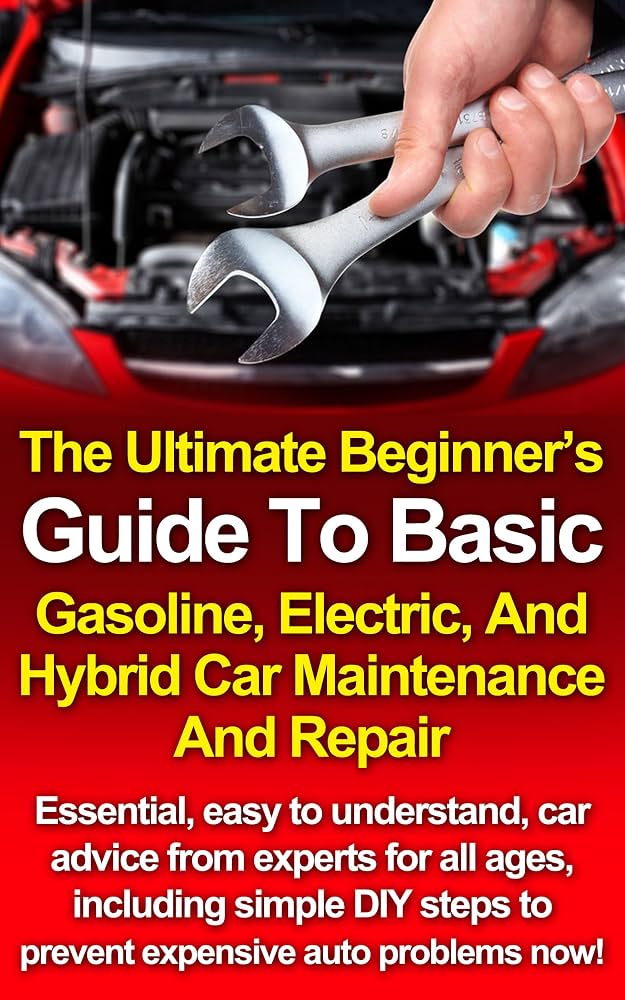
DIY Electric Vehicle Maintenance Basics: Keep Your EV Humming Without Breaking the Bank

Read Time:7 Minute, 31 Second
So you’ve got an electric vehicle. Maybe it’s a sleek Tesla, a trusty Nissan Leaf, or a zippy Chevy Bolt. You love the silent torque, the lack of gas stations, the smug feeling of passing a pump. But here’s the thing — even though EVs have fewer moving parts than a combustion car, they aren’t totally maintenance-free. And honestly, a lot of the basic stuff you can handle yourself. No need for a mechanic for every little squeak. Let’s roll up our sleeves.
Wait, Do EVs Really Need Less Maintenance?
Short answer: yes. Long answer: it’s complicated. You don’t have oil changes, timing belts, or spark plugs. No exhaust system, no transmission fluid swaps. But you do have a massive battery pack, a high-voltage system, and some unique wear items. Think of it like a smartphone on wheels — simple in theory, but with its own quirks. The trick is knowing what you can touch and what’s best left to pros.
Here’s the deal: many EV owners are surprised to learn they still need to rotate tires, replace cabin air filters, and check coolant. Yeah, coolant. It’s for the battery thermal management system, not the engine. Surprised? I was too.
The Big Three: Tires, Wipers, and Fluids
Let’s start with the boring stuff — the stuff that’s actually easy to DIY. You don’t need a degree in electrical engineering for this.
Tire Rotation and Pressure
EVs are heavy. The battery pack adds hundreds of pounds, so your tires wear faster. Especially the rears if you’ve got a lead foot. Check your tire pressure monthly — it’s a five-minute job with a $10 gauge. Under-inflated tires kill range faster than you’d think. Rotate them every 6,000 to 8,000 miles. Most EVs have a jack point diagram in the manual. Just don’t jack it up on the battery pack. That’s… bad.
Pro tip: some EVs have specific tire rotation patterns because of regenerative braking. Check your owner’s manual. Seriously. It’s not the same as a gas car.
Wiper Blades and Washer Fluid
This one’s a no-brainer. Wipers wear out faster in EVs because the windshield is often more sloped (aerodynamics, baby). Replace them every six months or when they start streaking. And top off washer fluid — but use a low-conductivity fluid if your EV has a sensor. Some brands are picky. I’ve used Rain-X in my Leaf for years without issue, but your mileage may vary.
Coolant and Brake Fluid
Okay, this is where it gets interesting. EVs have coolant loops for the battery and the inverter. It’s usually a special type — not the green stuff you’d pour into a Honda. Check the reservoir level every few months. Topping off is easy, but flushing? That’s a bit more involved. I’d leave that to a shop unless you’re really handy. Brake fluid, though — that’s standard. Check it yearly. EVs use regenerative braking, so your pads last forever, but the fluid still absorbs moisture over time.
The Battery: Don’t Panic, But Don’t Poke It
Here’s the elephant in the room. The high-voltage battery. It’s scary, right? 400 volts or more. You can’t just open it up and fiddle with cells like a AA battery. That said, there are some basic things you can do to extend its life.
- Don’t let it sit at 100% or 0% for long. Lithium-ion batteries hate extremes. Keep it between 20% and 80% for daily driving. Only charge to 100% before a long trip.
- Keep it cool. Heat is the enemy. Park in the shade if you can. Some EVs have thermal management, but it’s not magic.
- Check the 12V battery. Wait, there’s a second battery? Yep. Most EVs have a standard 12V lead-acid battery for lights, infotainment, and door locks. It dies just like in a gas car. If your EV won’t “start” (or wake up), it’s often the 12V battery. Replace it yourself — it’s usually in the frunk or under a panel. Just disconnect the negative terminal first.
I once had a Leaf that refused to turn on. I spent an hour panicking, thinking the main battery was dead. Nope. $150 12V battery later, it was fine. Lesson learned.
Brakes: They Last Forever, But Check ‘Em Anyway
Because of regenerative braking, your friction brakes barely get used. Some EV owners go 100,000 miles without changing pads. But here’s the catch — the calipers can seize from lack of use. Every few months, do a few hard stops from 30 mph to scrub the rotors and exercise the calipers. It sounds counterintuitive, but it prevents rust buildup. Also, listen for squealing. If you hear it, the pads might be glazed.
You can inspect the brake pads yourself. Just look through the wheel spokes. If the pad material is less than 3mm, it’s time to replace. That’s a DIY job if you’re comfortable with a jack and a C-clamp. If not, a shop can do it cheap.
Cabin Air Filter: The Forgotten Hero
This one’s stupidly easy. Most EVs have a cabin air filter behind the glove box. Pop it out, slide a new one in. Takes five minutes. Do it every 12,000 miles or once a year. Your nose will thank you — especially if you live in a dusty area or have allergies. I change mine in the spring and fall. It’s like giving your car a breath of fresh air.
Some EVs have a “bioweapon defense mode” or HEPA filters (looking at you, Tesla). Those are pricier but still DIY-able. Just watch a YouTube video for your specific model.
Software Updates: The New Oil Change
This is weird for old-school gearheads. Your EV’s “maintenance” might just be a software update. Over-the-air updates can improve range, fix bugs, or even add features. Make sure your car is connected to Wi-Fi regularly. Some updates take hours. Don’t interrupt them — you might brick a module. But honestly, it’s easier than changing oil. Just tap “install” and walk away.
One caveat: if your EV has a dealer-only update (like some older Leafs), you might need to visit a shop. But most newer models handle it themselves.
What About the Charging Port?
It’s easy to ignore, but your charging port gets dirty. Dust, grime, even melted snow can cause poor connections. Inspect it monthly. Use a can of compressed air to blow out debris. If the pins look corroded, a little dielectric grease on a Q-tip can help. Don’t use water or metal tools. And for heaven’s sake, don’t jam a wet charging cable in there — that’s a recipe for a short circuit.
Also, check the rubber seal around the port door. If it’s cracked, water can get in. Replace it if needed. It’s a cheap part.
A Quick Maintenance Schedule (Because We All Love Lists)
| Task | Frequency | DIY Difficulty |
|---|---|---|
| Check tire pressure | Monthly | Easy |
| Rotate tires | Every 6,000–8,000 miles | Medium |
| Replace cabin air filter | Every 12,000 miles | Easy |
| Inspect brake pads | Every 10,000 miles | Easy |
| Check coolant level | Every 6 months | Easy |
| Replace 12V battery | Every 3–5 years | Medium |
| Clean charging port | Monthly | Easy |
| Software update check | Quarterly | Easy |
That’s it. Honestly, it’s less than half the work of a gas car. And you save money on oil changes, belts, and emissions checks. The trade-off? You need to be a bit more mindful about the battery. But that’s not hard — it’s just a habit.
When to Call a Pro (No Shame in That)
Look, I’m all for DIY. But some things are genuinely dangerous. High-voltage systems can kill you — literally. If you’re dealing with the main battery pack, the inverter, or the motor, leave it to a certified technician. Also, if your EV has a coolant leak, it might be from a high-voltage component. Don’t guess. Pay the diagnostic fee.
And if your car throws a warning light that says “Service High Voltage System” — don’t ignore it. That’s not a tire pressure sensor. That’s a serious issue. Park it, call a tow, and let the experts handle it.
But for the other 90% of maintenance? You’ve got this. A socket set, a jack, and a little confidence go a long way. Plus, there’s something satisfying about knowing your car inside and out — even if it’s silent.
So go ahead. Check that tire pressure. Swap that filter. Give your EV a little love. It’ll reward you with years of quiet, efficient miles. And you’ll have saved a few bucks for the important stuff — like snacks on your next road trip.


Happy
0 %

Sad
0 %

Excited
0 %

Sleepy
0 %

Angry
0 %

Surprise
0 %
 0
0
 0
0
More Stories
Specialized Repair Techniques for Aluminum-Bodied Vehicles
Aluminum-bodied vehicles aren’t exactly new—Jaguar and Audi have been pushing them for decades—but they’ve hit the mainstream in a big...
Vintage Car Electrical System Modernization: Bringing Your Classic Back to Life
You know that feeling when you turn the key on your '65 Mustang or '72 Porsche 911... and nothing happens?...
Integrating 3D Printing and Custom Fabrication in the Modern Repair Shop
The sound of a repair shop is changing. It’s not just the clang of a wrench or the hum of...
Specialized Maintenance and Repair for Hybrid Delivery and Rideshare Vehicles
Let's be honest. If you're driving a hybrid for Uber, Lyft, or delivering packages, your car isn't just a vehicle—it's...
The Rise of the DIY Electric Vehicle Owner: Maintenance You Can and Cannot Do
The garage is changing. Gone, slowly, are the puddles of oil and the scent of gasoline. In their place? A...
Navigating Advanced Driver-Assistance Systems (ADAS) Calibration After Repairs
So, your car’s been in a fender bender. The body shop did a beautiful job—the paint matches, the panel gaps...
Average Rating