
Paintless Dent Repair Techniques for Aluminum Body Panels

Read Time:5 Minute, 15 Second
Aluminum body panels used to be the exception. Now? They’re everywhere. Ford’s F-150 switched to an all-aluminum body back in 2015, and plenty of manufacturers followed suit — Audi, Jaguar, Tesla, Chevy. The reason is simple: aluminum is lighter, which means better fuel economy and snappier handling. But here’s the catch. When you ding an aluminum panel, fixing it isn’t quite the same dance as fixing steel. Paintless dent repair, or PDR, still works. It just demands a different touch, different tools, and honestly, a different mindset.
Let’s break down how PDR techs actually massage dents out of aluminum — and why it can feel like coaxing a stubborn cat out from under the couch.
Why Aluminum Behaves Differently Under a Dent
Steel has memory. You push it, it wants to spring back. Aluminum? Not so much. It’s softer, yes, but it also work-hardens fast. That means every time you flex it, it gets stiffer and more brittle. Push too hard or too fast, and you’ll crack the panel or stretch the metal beyond repair. Game over.
There’s also the heat factor. Aluminum dissipates heat about five times faster than steel. So if you’re using heat to relax the metal — a common PDR trick — you’ve got a narrow window before that heat vanishes. It’s like trying to toast a marshmallow over a candle in a windstorm. You need precision and speed.
Key takeaway: Aluminum requires gentler force, more patience, and a healthy respect for its limits. Brute force is your enemy here.
Core PDR Techniques That Work on Aluminum
Not every steel technique translates perfectly. But several do — with modifications. Here’s what actually works in the bay.
1. Glue Pulling (The Go-To for Aluminum)
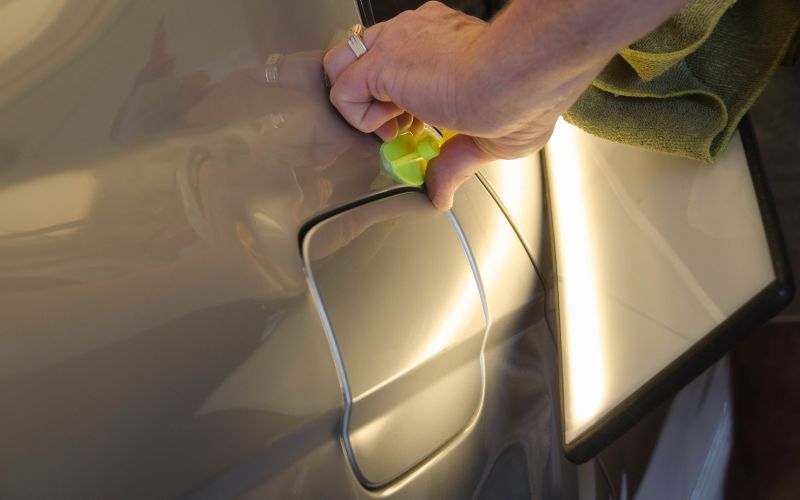
Glue pulling is the bread and butter of aluminum PDR. Why? Because you’re not poking behind the panel. You’re pulling from the outside. That matters when you can’t access the back of a panel — which happens a lot with modern unibody designs.
Here’s the rough process:
- Clean the dented area thoroughly. Any wax, dirt, or silicone will sabotage the bond.
- Apply a special hot-melt glue using a glue gun. Let it cool just enough to get tacky — not rock hard.
- Stick a pulling tab onto the glue. Hold it steady until it sets.
- Use a mini-lifter or slide hammer to pull gently. Very gently. Aluminum doesn’t like sudden jerks.
- Remove the tab with alcohol or a release agent. Clean up. Repeat if needed.
The trick is to pull in tiny increments. Think of it like slowly peeling a sticker off glass — rush it, and you tear the sticker. Or in this case, crack the paint or the panel.
2. Knockdown and Push-to-Paint (When You Have Access)
If you can reach behind the panel — say through a wheel well or an access hole — you can use traditional push tools. But aluminum demands a lighter hand. Steel rods that work fine on a steel door will dent aluminum if you’re not careful.
Use nylon-tipped rods or softer metal tips. And apply pressure in slow, controlled pulses. Not one big shove. More like tapping a drum, not punching a wall.
Also, “push-to-paint” means you’re pushing the metal back to roughly its original shape, then relying on paintless finishing. On aluminum, you might not get it 100% perfect. And that’s okay. Sometimes 90% is the realistic goal before you need a body shop.
3. Heat Cycling — With Extreme Caution
Heat can relax aluminum and make it more malleable. But remember that fast heat dissipation? You need a heat gun with precise temperature control, not a blowtorch. And you need to move the gun constantly. Keep it 6–8 inches away. Test the panel with your hand — if it’s too hot to touch for more than a second, you’re already pushing it.
Honestly, many PDR techs skip heat on aluminum unless they’re dealing with a stubborn crease. It’s risky. One slip and you’ve got a warped panel or bubbled paint.
Tools That Make or Break the Job
You can’t use the same kit for steel and aluminum and expect great results. Here’s a quick comparison of what changes.
| Tool Type | For Steel | For Aluminum |
|---|---|---|
| Pry bars / rods | Hardened steel, sharp tips | Nylon or soft-metal tips, rounded edges |
| Glue | Standard hot melt | Low-temperature, high-flex glue |
| Pulling tabs | Rigid plastic or metal | Flexible plastic, varied sizes |
| Heat source | Heat gun (higher settings) | Variable temp heat gun (low settings) |
| Lighting | Standard PDR light | LED line board (shows fine creases better) |
One more thing: aluminum dust is flammable. If you’re sanding or grinding near a dent (which you shouldn’t be doing in PDR, but still), keep a fire extinguisher close. Seriously.
Common Mistakes (And How to Dodge Them)
- Pulling too hard, too fast. Aluminum stretches. Once stretched, it won’t go back. You’ll need filler and paint.
- Using steel tools on aluminum. You’ll gouge the surface or create tiny cracks that spread later.
- Skipping the glue test. Always test your glue on a hidden area first. Some glues pop off aluminum too easily; others pull paint.
- Ignoring temperature. Cold aluminum is brittle. Warm aluminum is soft. Work in a climate-controlled bay if you can.
- Assuming every dent is fixable. Sharp creases on aluminum? Often a body shop job. PDR has limits.
When to Walk Away (Yes, Really)
Not every aluminum dent is a PDR candidate. If the metal is stretched, if the paint is cracked, if the dent is on a crease line or near a seam — you’re better off referring the customer to a collision repair shop. PDR techs who promise miracles on aluminum often end up paying for a repaint out of pocket. Not worth it.
That said, for hail damage, door dings, and shallow parking lot dents? Aluminum PDR works beautifully when you respect the material.
The Bottom Line on Aluminum PDR
Aluminum isn’t steel. It’s softer, springier, and far less forgiving. But with glue pulling, gentle push tools, and a whole lot of patience, you can restore those panels without touching a paint gun. The key is to slow down. Feel the metal. Listen to it. And when in doubt, pull less, not more.
Honestly, the best aluminum PDR techs aren’t the strongest — they’re the most attentive. Because aluminum will tell you when it’s about to fail. You just have to pay attention.


Happy
0 %

Sad
0 %

Excited
0 %

Sleepy
0 %

Angry
0 %

Surprise
0 %
 0
0
 0
0

More Stories
Specialized Repair Techniques for Aluminum-Bodied Vehicles
Aluminum-bodied vehicles aren’t exactly new—Jaguar and Audi have been pushing them for decades—but they’ve hit the mainstream in a big...
DIY Electric Vehicle Maintenance Basics: Keep Your EV Humming Without Breaking the Bank
So you’ve got an electric vehicle. Maybe it’s a sleek Tesla, a trusty Nissan Leaf, or a zippy Chevy Bolt....
Vintage Car Electrical System Modernization: Bringing Your Classic Back to Life
You know that feeling when you turn the key on your '65 Mustang or '72 Porsche 911... and nothing happens?...
Integrating 3D Printing and Custom Fabrication in the Modern Repair Shop
The sound of a repair shop is changing. It’s not just the clang of a wrench or the hum of...
Specialized Maintenance and Repair for Hybrid Delivery and Rideshare Vehicles
Let's be honest. If you're driving a hybrid for Uber, Lyft, or delivering packages, your car isn't just a vehicle—it's...
The Rise of the DIY Electric Vehicle Owner: Maintenance You Can and Cannot Do
The garage is changing. Gone, slowly, are the puddles of oil and the scent of gasoline. In their place? A...
Average Rating